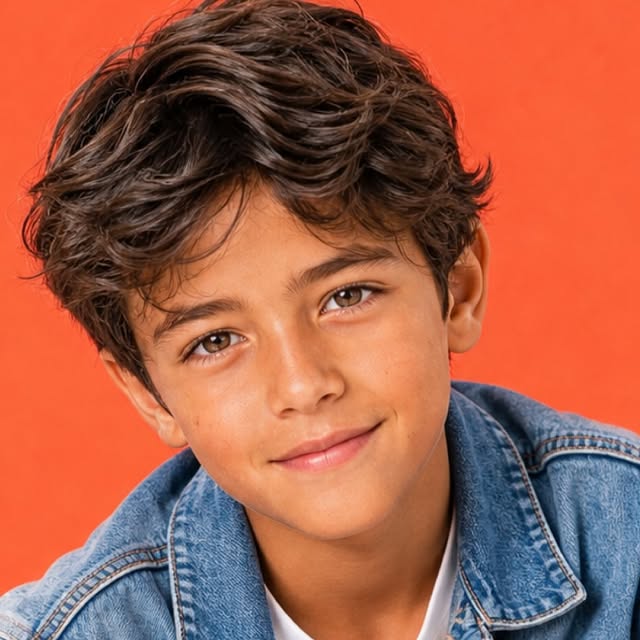
The main wardrobe principle
A casting headshot is not a fashion editorial. Clothing matters, but it should not become the first thing a viewer remembers. Choose pieces that look current, fit properly and help the eye travel directly to your child’s expression.
Start with clothing your child already feels comfortable wearing. If a shirt is itchy, stiff, oversized or constantly needs adjusting, that discomfort will show long before the brand name does.
A wardrobe look can suggest bright commercial energy, grounded theatrical work or a particular casting lane—without becoming a literal costume.
Wardrobe for commercial kids headshots
Commercial images usually need warmth, openness and broad relatability. Clean color, simple casual layers and approachable textures work well for family, lifestyle, food, retail, education and youth-brand submissions.
Strong commercial options
- A clean solid T-shirt in a flattering mid-tone or brighter color.
- A simple denim layer, casual overshirt or lightweight jacket.
- A neat polo or casual button-up that still feels age appropriate.
- Soft knits and familiar textures that do not overwhelm the face.
Choose color based on your child, not a universal rule. Blue, green, warm rust, coral, mustard and soft jewel tones can photograph beautifully when they complement skin, hair and eyes.
Wardrobe for theatrical kids headshots
Theatrical does not mean gloomy. It usually means the photograph carries more grounded focus, emotional depth and character possibility. Darker neutrals, muted color and simpler layers can support that feeling.
Useful theatrical options
- Charcoal, forest green, navy, burgundy or soft brown.
- A simple crew neck, henley, knit or understated jacket.
- Texture without a loud print.
- A neckline that frames the face cleanly.
Avoid dressing a young child like a miniature adult. The image can feel serious and professional while remaining honest about age.
Colors, patterns and necklines
Color
Mid-tones and rich solids are often dependable because they hold detail and separate from many backgrounds. Very bright neon can reflect color onto skin. Pure white can work, but it draws attention and may lose texture under bright light. Black can be elegant but sometimes feels heavy on very young children.
Patterns
Small checks, narrow stripes and high-contrast prints can create moiré or visual noise. Logos may date the image, distract from the face or limit how a casting team reads the child. A quiet texture is usually more useful than a loud graphic.
Necklines and fit
Check how a neckline behaves when your child sits, turns and leans. A stretched collar or oversized shoulder changes the apparent proportions of the face and body. The best fit allows comfortable movement while still looking intentional.
Wardrobe advice by age
Younger children
Prioritize softness, movement and quick changes. Avoid complicated buttons, rigid collars and accessories that need constant correction. A simple top plus one easy layer gives useful variety without draining attention.
Preteens
Let them participate in choosing between photographer-approved options. Clothing should feel current but not trend-dependent. Bring one approachable look and one slightly more grounded look if the package allows.
Teen actors
Teen wardrobe can show more individual style, but the headshot still needs casting flexibility. Choose one clean, broadly useful outfit before adding a more specific layer or look. Avoid styling that makes the teen appear much older than they are unless an agent has specifically requested it.
What to avoid
- Large logos, slogans and recognizable characters.
- Neon colors that reflect onto the face.
- Tiny high-contrast patterns and very narrow stripes.
- Clothing that is visibly too large, too tight or uncomfortable.
- Costumes or literal occupational styling unless specifically requested.
- Brand-new shoes or accessories that will never appear in the crop.
- Too many nearly identical tops.
Do not buy an entire new wardrobe before the photographer reviews what you already own. Often the strongest options are familiar clothes combined differently.
How many outfits should you bring?
For a one-look Quick session, bring two complete choices so the final decision can account for background and light. For Portfolio or Signature sessions, bring several complete outfits that create distinct commercial and theatrical directions rather than minor color substitutions.
- Photograph every complete outfit before packing.
- Place accessories with the intended look.
- Use hangers to prevent wrinkles.
- Pack a backup for spills.
- Bring simple grooming supplies and a lint roller.
Book first, then share wardrobe options during planning. The final choice should support the exact images your child needs—not an abstract list of rules.